A Brief Explanation and Guide to A/VWAP Usage
1. What is VWAP and How Does It Work?
VWAP, or Volume-Weighted Average Price, performing and moving similar to a moving average, is the calculation of the markets average transaction price within a given timeframe. Weighing each trade by its size in volume, rather than simply price alone like a moving average. Making it a reliable benchmark for whether buyers or sellers are holding the market at any moment.
When price is above VWAP, this shows buyers are considered under control. When price is below VWAP, this shows sellers are in control.
Trading VWAP is therefore straight-forward.
For the risk-averse, buy when price taps VWAP from above and holds, conversely, short when price is below VWAP and rejects from VWAP.
2. How Algorithms Use VWAP in Futures Markets
In modern futures markets, a significant portion of executed volume is algorithmic. They are not trying to predict price, they operate on execution logic, inventory management, as well as benchmarking price. VWAP is one of the most commonly used tools in the institutional algorithmic systems.
- VWAP as an Execution Benchmark
Institutional executional algorithms (VWAP, TWAP, POV) use VWAP to measure quality of fill price relative to market conditions. If an algorithm must accumulate or distribute size over a longer period of time, VWAP becomes the cost basis, the performance benchmark.
In Futures specifically, market makers will often attempt to keep fills close to VWAP because of thin spread.
- VWAP as a Fair Price Estimate For Market Making Algorithms
Market making algorithms quote around VWAP because it represents the markets current average transaction price over a given period. If a market maker fills orders too far from VWAP, they risk accumulating toxic inventory, increasing hedging costs, as well as being picked off by even bigger players.
MM's cluster liquidity around VWAP. This is why BTC oscillates around intraday/session VWAP in bouts of low volatility. It is quite literally the execution algorithms benchmark of fair price.
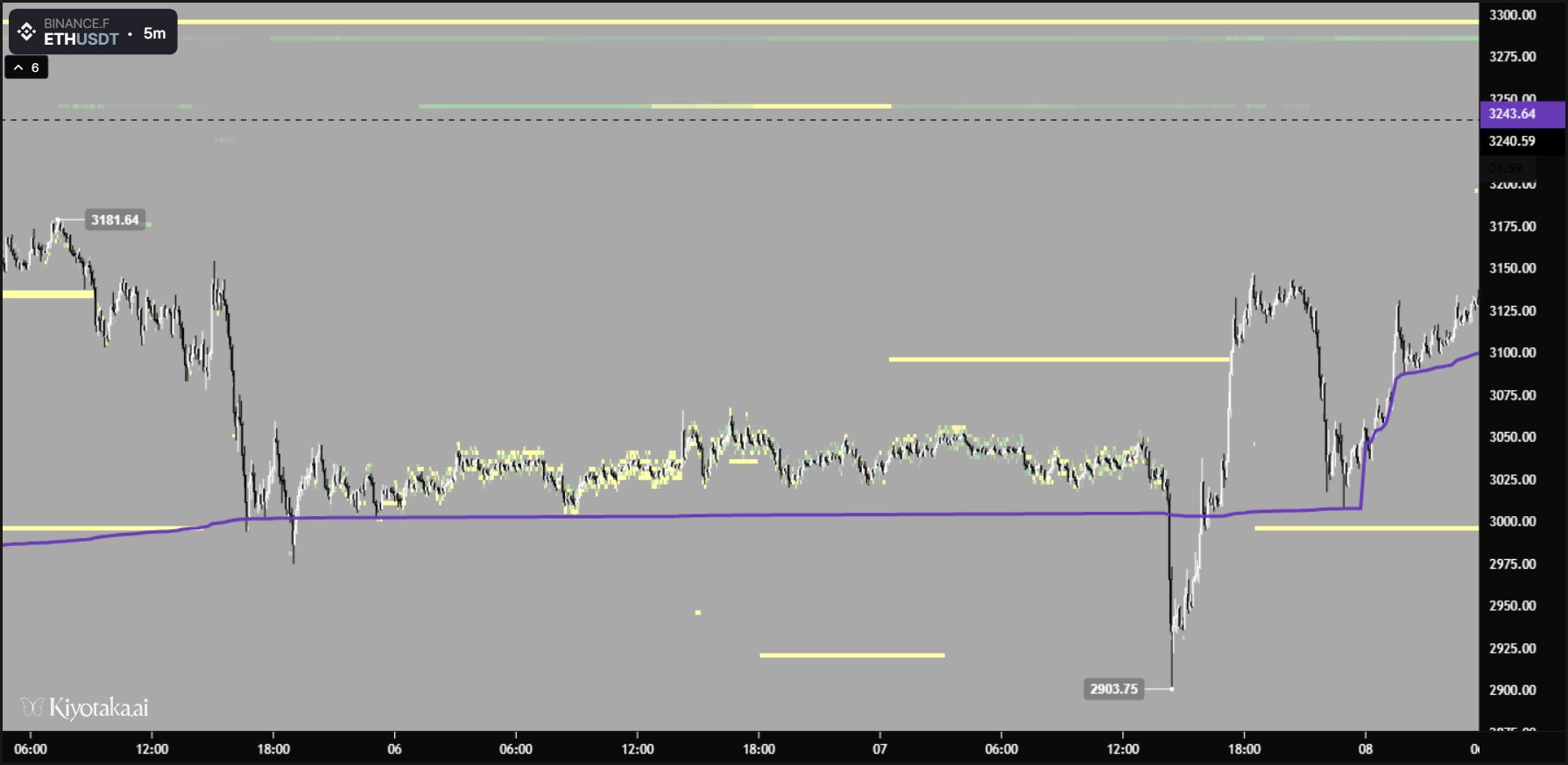
MM algo's reshaping their inventory around weekly VWAP as pictured below.
3. Points To Note For Anchored VWAP
A core rule from the creator of AVWAP himself, Brian Shannon, "anchor to the moment when the market changed it's mind"
- Event Based Anchors
Moments where external catalysts drive a surge in volume, volatility, or sentiment.
Such as:
CPI, FOMC, NFP,
Rate decisions
Large exchange news: ETF rules, SEC involvement, regulatory action
Exchange outages or liquidations
Each event drives a large amount of new participants. The anchored VWAP captures the average price of the participants after these moves.
- High Volume Anchoring
Anchor VWAP to any candle where:
Volume was abnormally elevated
Range expanded beyond previous volatility
Market breaking from consolidation
- Price Based Anchoring
This can include events such as:
All time highs
Cycle high or low
Swing points
Breakouts
Failed Breakout highs/lows
Range equilibrium of multi-day/week consolidation
- Time Based Anchoring
My personal favorite and best for intraday trading
This can include:
Candle count based VWAP's
Session VWAP
Daily VWAP
Weekly VWAP
Monthly VWAP
Quarterly VWAP
Yearly VWAP
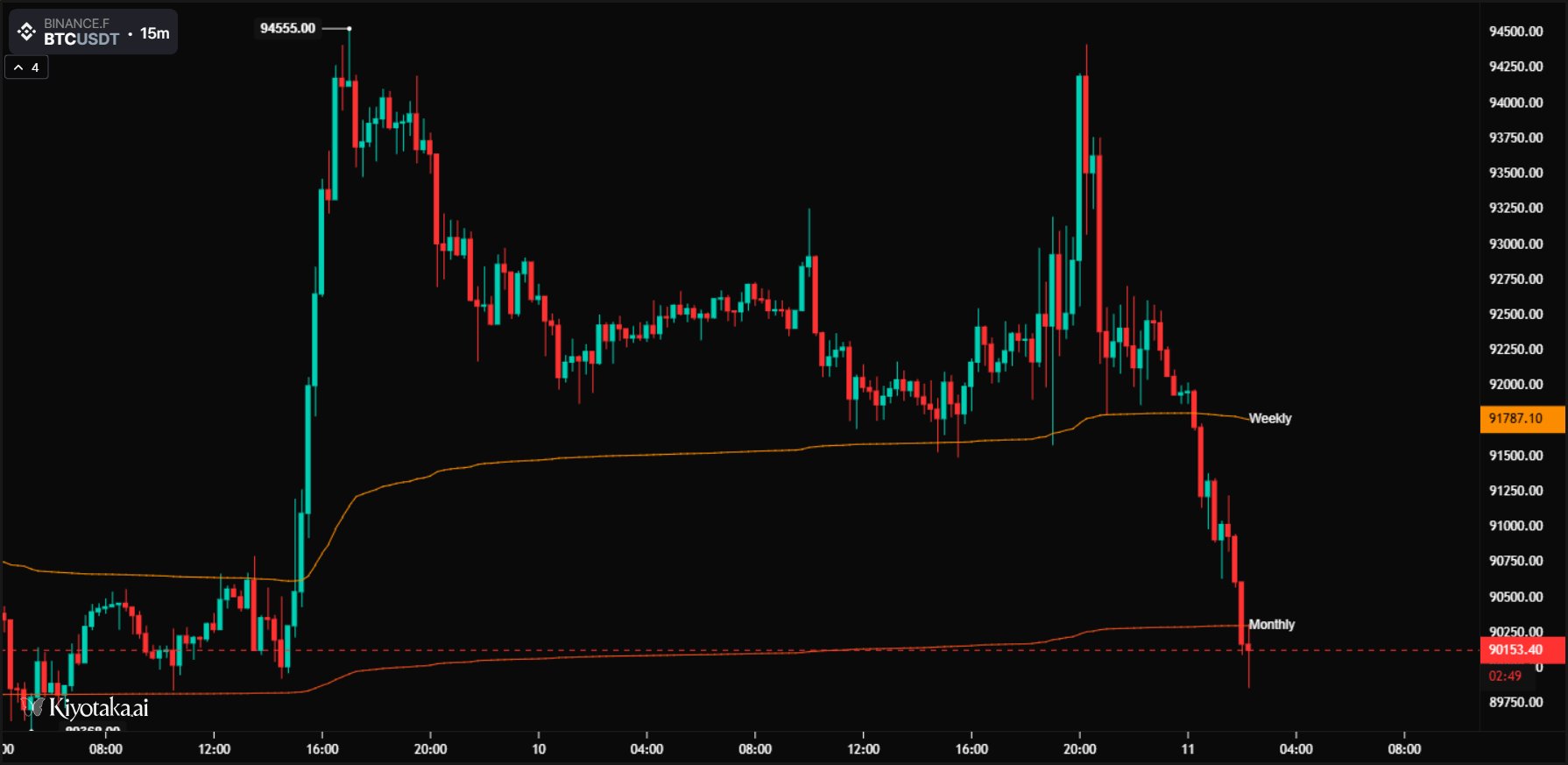
(Several touches to the weekly VWAP before FOMC. Dec 10 2025)
VWAP remains effective because of its clarity and simplicity. By giving a clear view of the markets true average price, it offers a reliable reference point used by institutional algorithms. In modern futures, this straightforward insight makes VWAP one of the most valuable tools for understanding price and assessing trend strength.