Market Profile Series #7
This article is tightly linked to article #6, so please make sure you've read it before you continue. X was down when I published it, and it didn't reach many people.
First, a little update on the status of the series.
After writing this article, I have realized most of the stuff I was planning to talk about in articles 9 and 10 is related to experience, and I don't think there's a suitable way to communicate it to you the way I want.
When you pick up something new, your brain looks for prepackaged information to find the North on the compass.
Imagine you just materialized in this world, and it's cloudy weather. If I told you, "Hey, get an umbrella, it's going to rain", and it actually rains that day, you would associate cloudy = rain. However, my statement is based on the fact that, after living in this world for years, most people can literally sense the change of pressure and wind, and guess with a good probability if it is, in fact, going to rain.
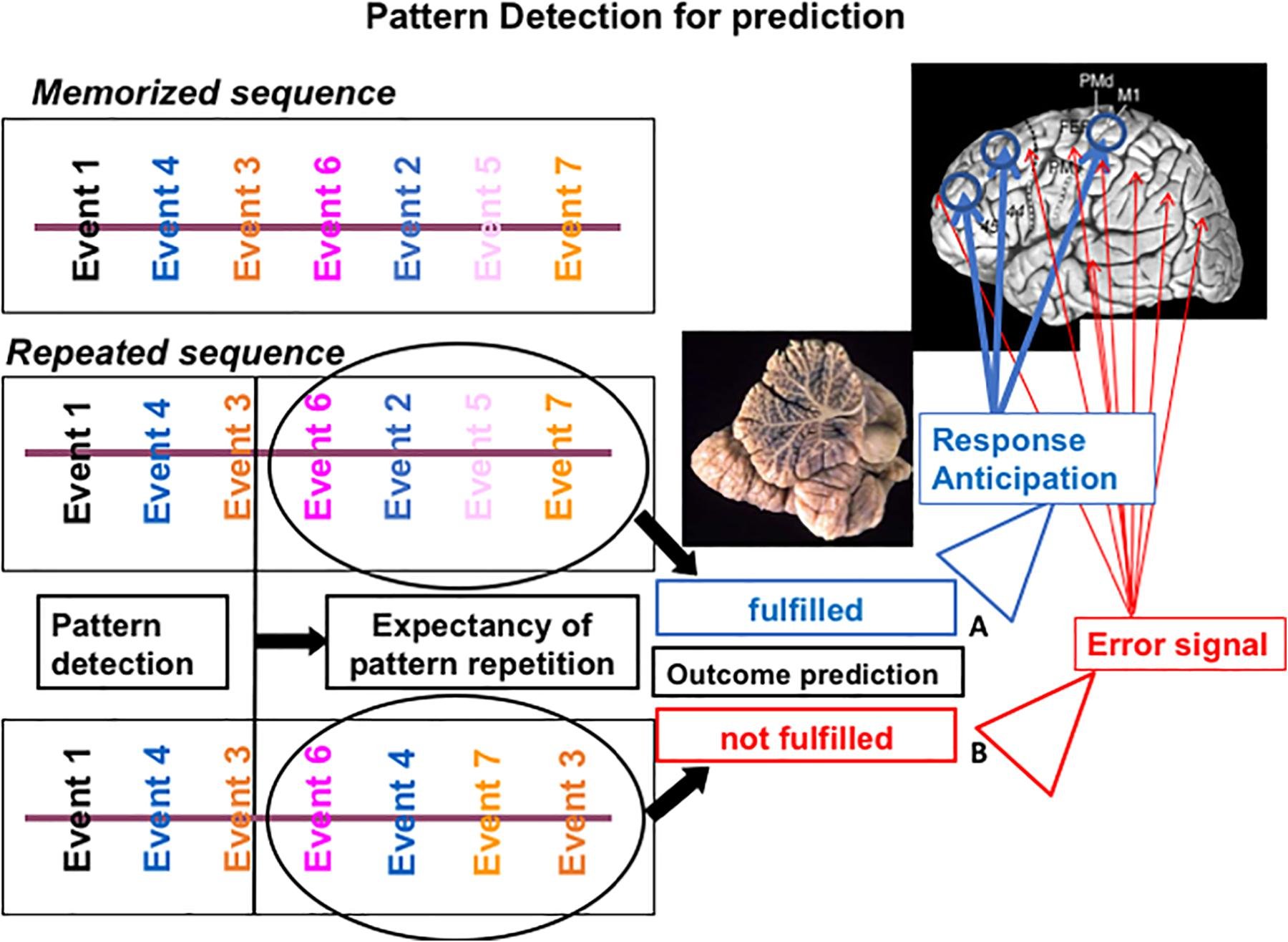
Create expectancy based on your experience, not mine. Otherwise it's going to get very fucky very soon.
However, I often leave without an umbrella, and I've been pissed on by the sky more times than I care to remember. I don't want to pass my own biases down to you in the articles. I will do that in normal X posts.
Therefore, I will wrap up the Market Profile series in article 8, and move to Orderflow + scalping series.
As usual, no AI slop, no kind words, just the hard reality.
It doesn't mean I'm done discussing Market Profile, but rather that you will find the helpful stuff in the normal X posts, and I will treat you like adults about this. You have the keys to understand what I'm saying. And if you don't, ask a question in the comments.
However, if the answer is already in the articles, I will just point you there. You can re-read them + I'm not your personal clanker.
You can leave the nest and start developing your own strategies, but I will give you mine in the next (and last Market Profile Series) article.
Fly high, babes.
0. Foreword
I have outlined the concept of tempo, now we have a look at momentum.
Some of you might be familiar with "momentum indicators" such as RSI. The problem with these indicators is that they are quite limited when it comes to the depth of information they rely on, and are therefore unreliable when it comes to continuation.
For example, RSI can stay overbought or oversold for a long time, despite pullbacks/bounces.
We (reads "you") have to develop a more holistic and nuanced approach to information if we want to use the Market Profile. What does it mean?
It means we need to use the brain to process the information. But how do we do it?
- Momentum
Momentum is context. Momentum is "what" and "why" something is happening in the market.
RSI and similar indicators give you the "what" (up/down), but not the why.
In the previous article, when I mentioned market structure, I was referring exactly to this concept. Market structure is the "what". How's the trend looking? You know the drill, Anon.
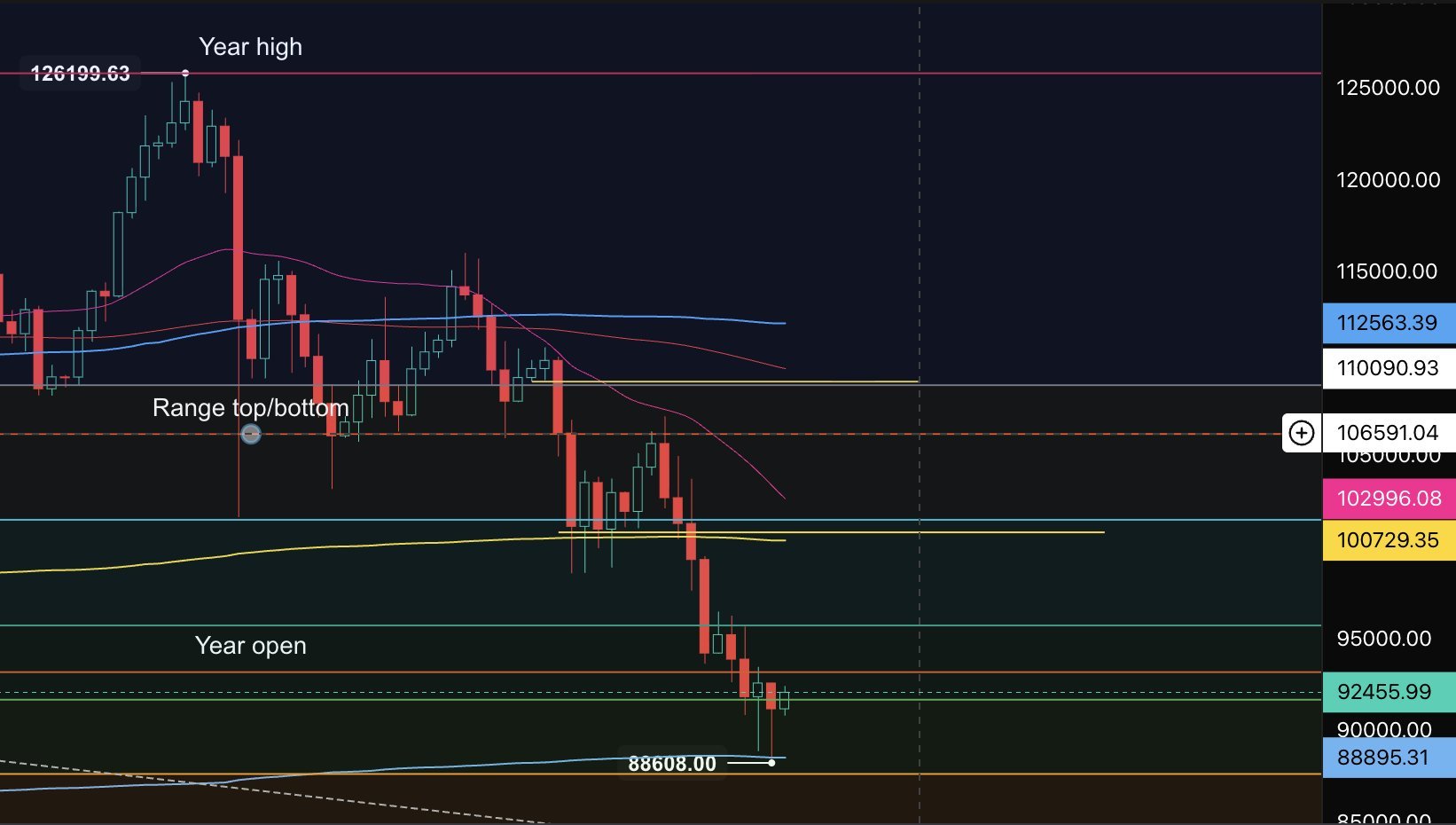
General momentum is bearish. Easy, right?
But market momentum is not limited to the general trend. We also have price and volume, for example.
Well, as you know by now, market and volume are linked together within the profile.
If we only wanted relative returns, we'd just buy spot and go play outside.
But we are here for absolute returns. But we are degens and want to beat the fucking market. So we sit in our cave and trade perps.
So how can Market Profile help us?
By displaying momentum, and making it actionable.
By the way, Market Profile on
gets better by the day and new tools are rolled out weekly. Consider signing up and use my reflink (I don't get paid) to help support the amazing devs:
https://kiyotaka.ai/ref=MAZINO
We have defined some patterns in the past, now we go a bit more in depth and try to understand their meaning.
We need to distinguish between conviction markers and mechanical markers. The former are "driven" by something, the latter are "mechanical", and they will lead you to capitulate brutally if you cannot put them in context.
1.a Conviction markers
Some examples are imbalances, range extensions, one-timeframing, and longer-timeframe control by buyers or sellers.
2.a Mechanical markers
Some of these are excess, poor highs/lows, failed range extension, short-covering, etc. This stuff happens all the time, but taken out of context might lead you into a trap.
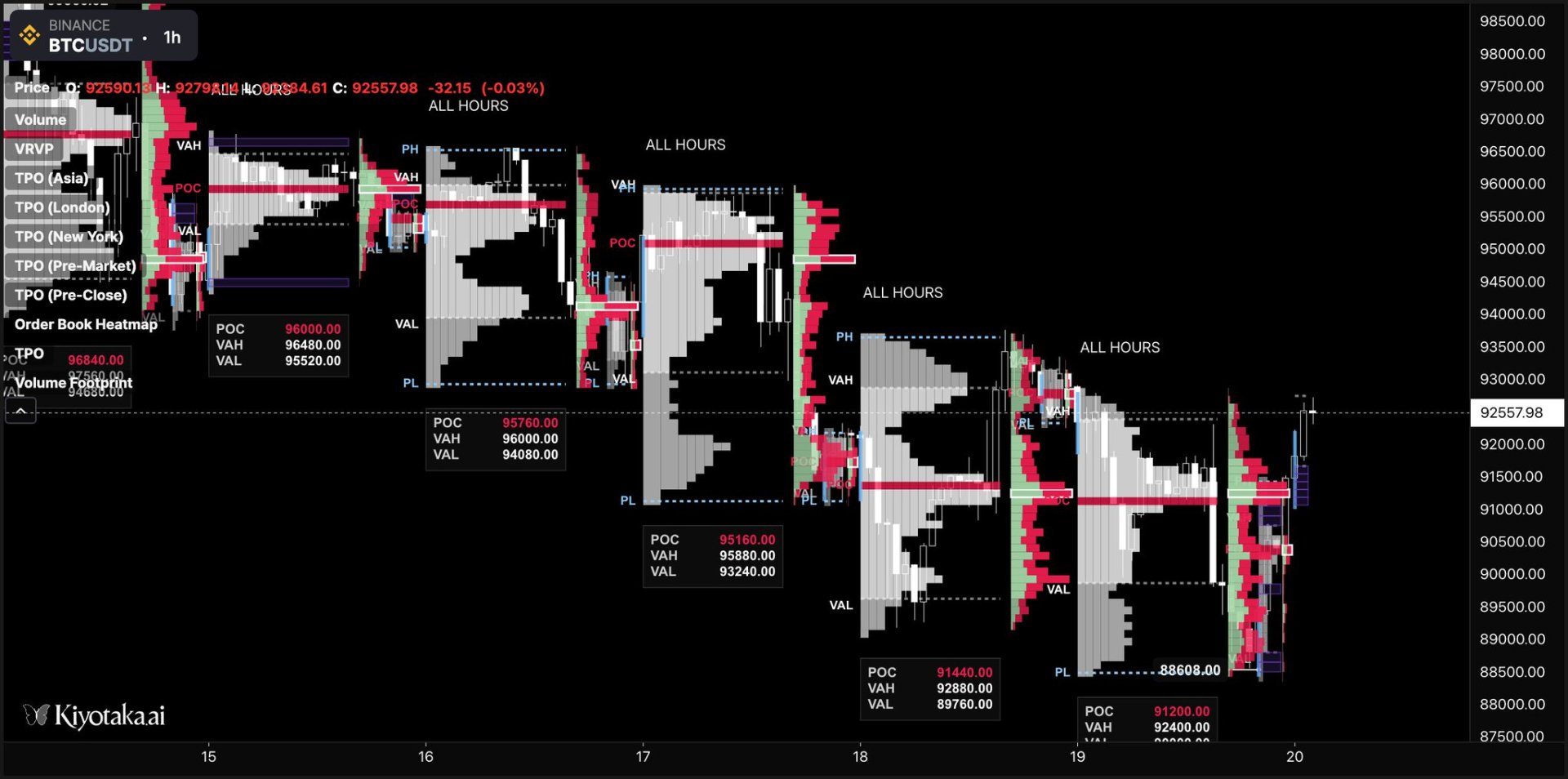
So many poor highs, but none taken out. Why is that, Anon?
We will be able to answer the question by the end of the article.
2. Patterns
One-timeframing: When the market trends in one direction, and a period does not trade against the previous period first TPO. Any TPO against the previous level opening increases the relevance.
Directional conviction is very high, so we have high momentum. Cessation of one-timeframing is usually the first warning that momentum is weakening or ending.
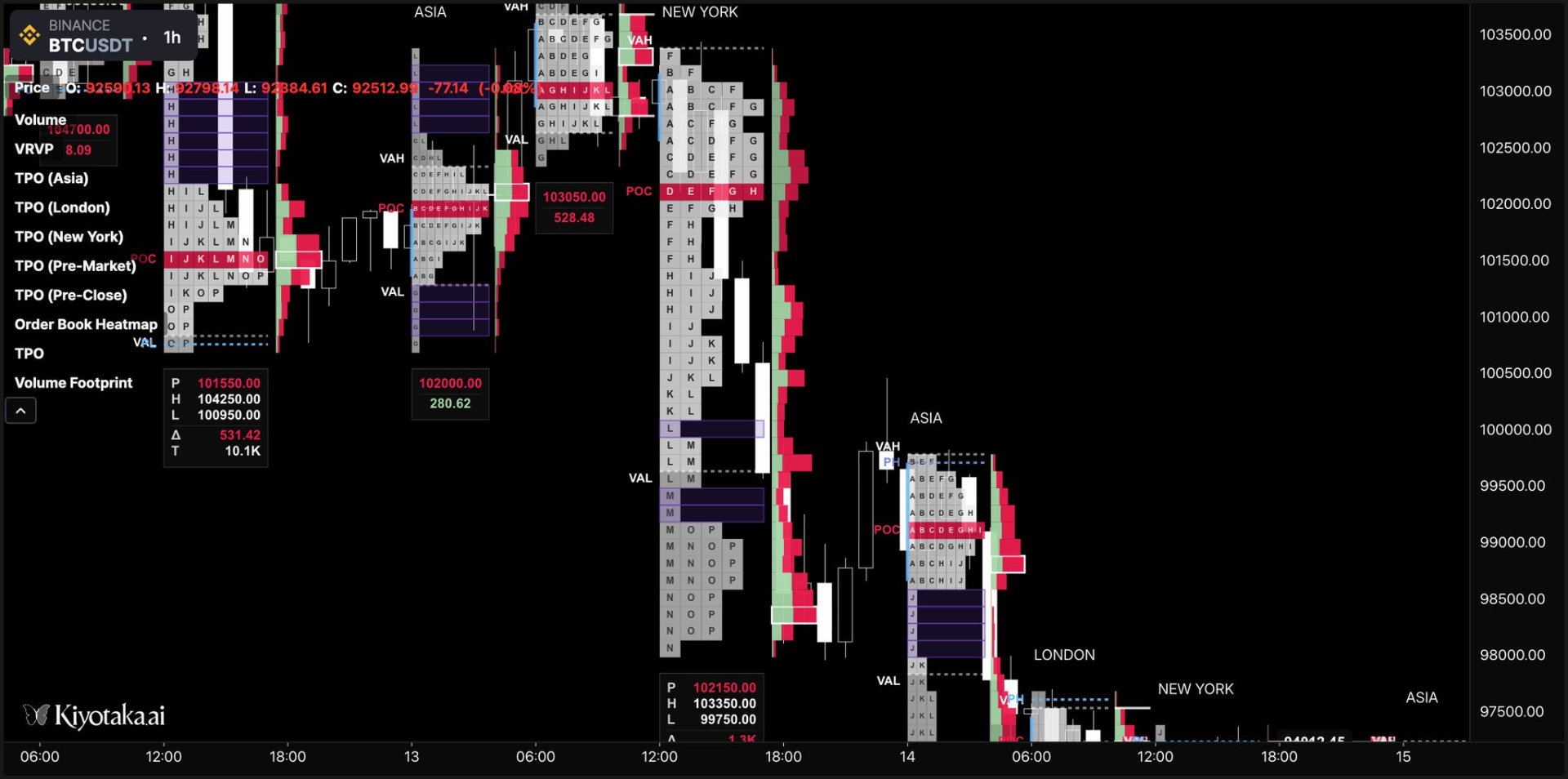
From period F one time-framing starts, and doesn't stop until period "O", the first one to trade against the previous period (namely, "N").
Trend day: slightly less conviction but conviction is still high. Likely together with one-timeframing, very thin profiles, often a single distribution. We talked about it plenty so I'm not going over it again.

Range Extension: When price trades in a narrow bracked, but then extends beyond the initial balance with conviction. Momentum is present, because participants started an auction.
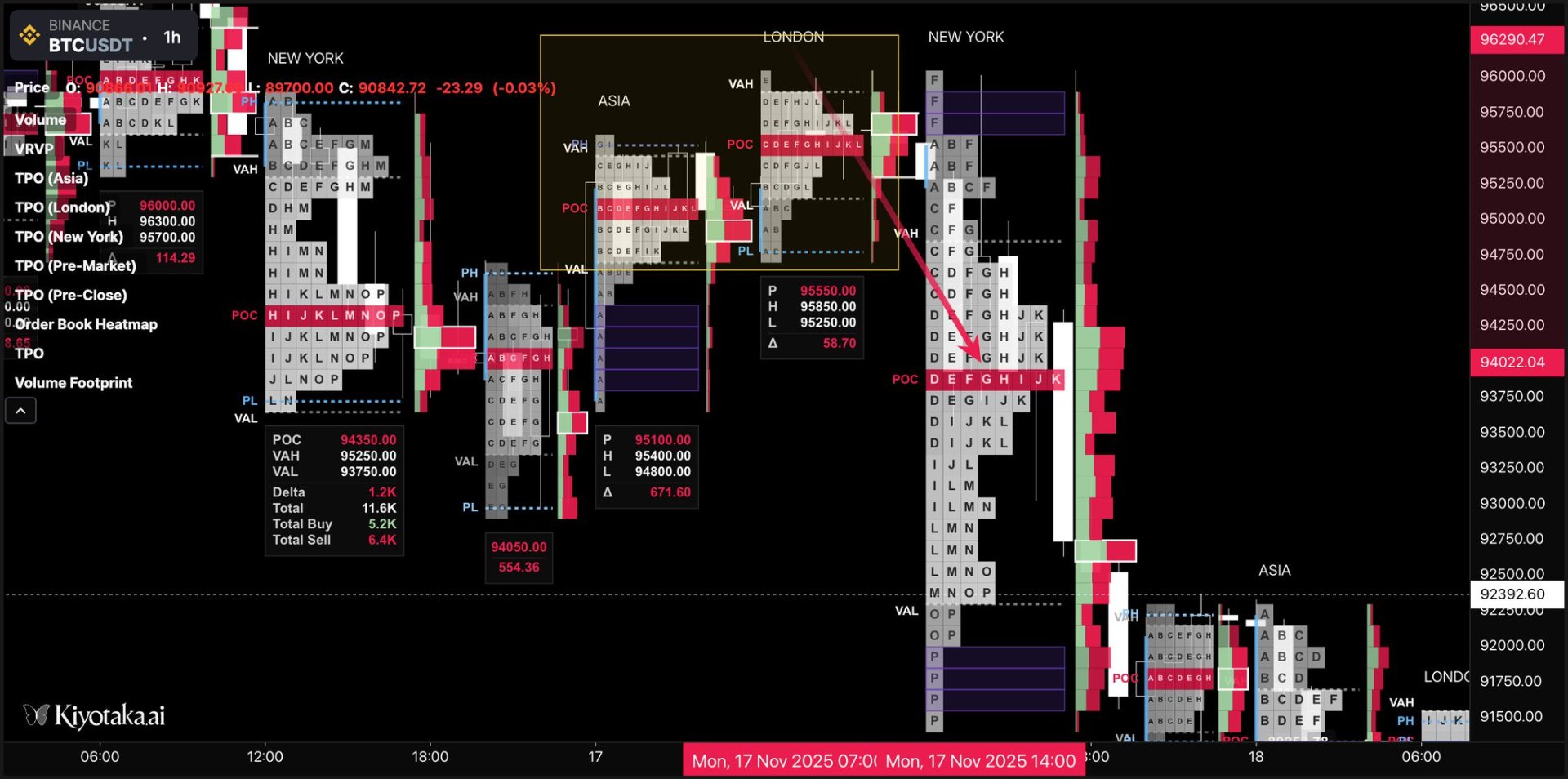
It's pretty straightforward now, right?
Range in yellow box, overlapping VA with exhaustion.
Narrow range formed (yellow box) with clear buyer exhaustion (P shapes), and range extension down (red arrow) after OPEN -> IB formed in the range (VA) of previous day. Market tried to extend outside IB (and more broadly, pdVA) above, fails -> REJECTION -> REVERSE and extend below.
Spike: a spike is just a momentum thrust, likely a SP, usually at session extremes (open or close).
A spike is an EXCESS! Does market like excess? NO, market hates excess because they are inefficiencies.
Therefore a spike often marks the end of momentum in that direction.
See picture above, F period on the Monday was an excess, same as A period on the previous Saturday.
POC Migration: We remember how a POC is calculated. So obviously if price trades far from POC in a consistent manner, creating more prints than previous POC, the POC will migrate there.
POC migration is an indicator in itself.
POC migration is relevant in two instances: short term (intra-day) and medium term (multi day).
Short term: When POC moves in a direction during the developing session, it signals consolidation of the level. Don't over-rely on this to setup a multi-session trade because following sessions (especially NY to Asia/London) can reverse quickly.
Medium-term: When the Point of Control moves aggressively in one direction over multiple days, it confirms building momentum (longer-timeframe control).
Tempo: remember tempo? Well, tempo is also a marker of momentum! Fast tempo is emotional, the faster, the more dangerous. When it's too fast (euphoria, capitulation), it can burn out and reverse the whole market trend.
Like an ATH, for example. hehe.
- The answer
Let's take another look at the timeframe is used for the figure in section 1.a, now in session profiles. First we look at it raw, then we speculate on what happened. Try to look only at the first picture for a moment before jumping to the next.
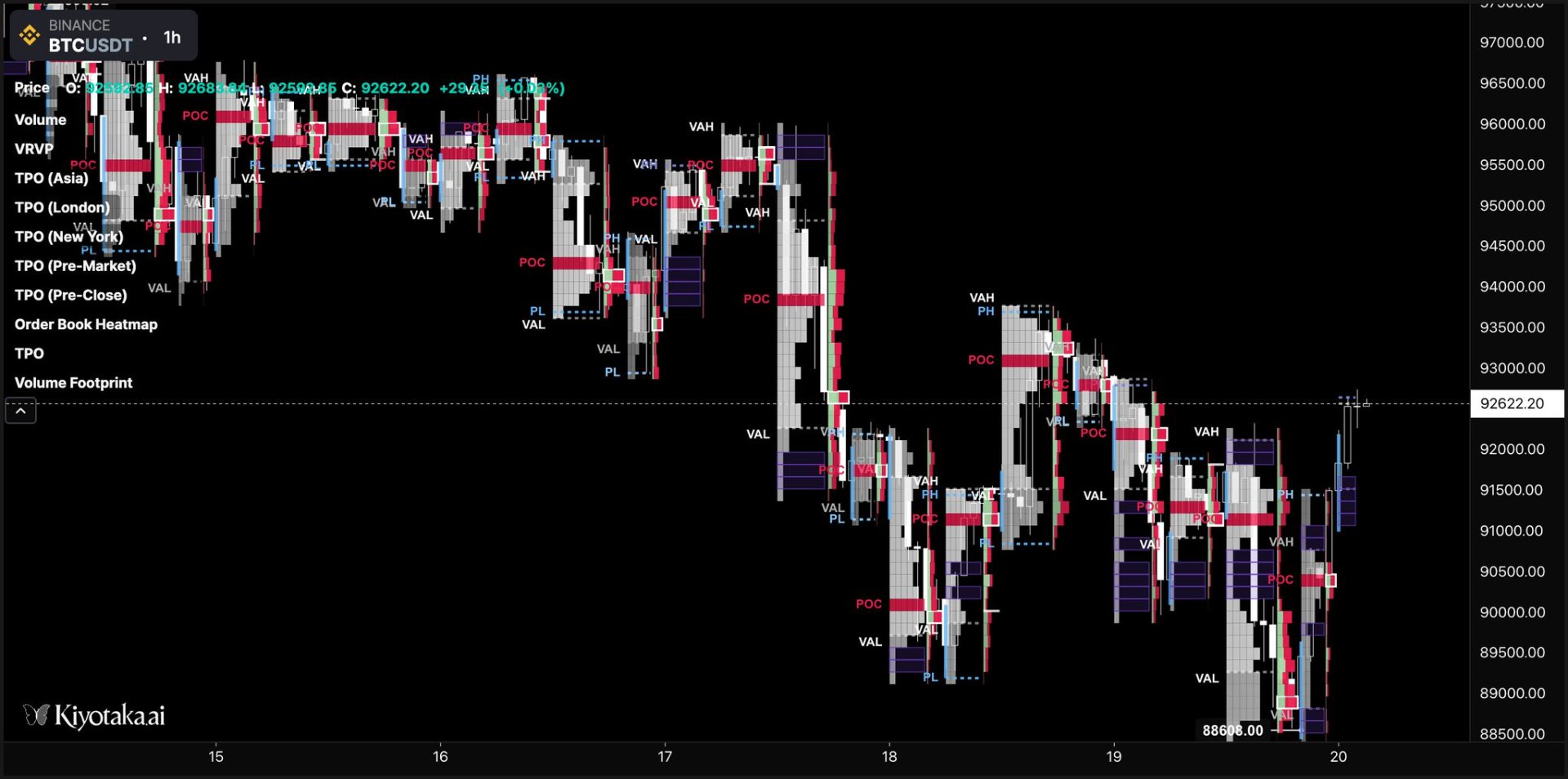
Use the brain, Anon, I beg you.
Try to think for a second before jumping to the next picture.
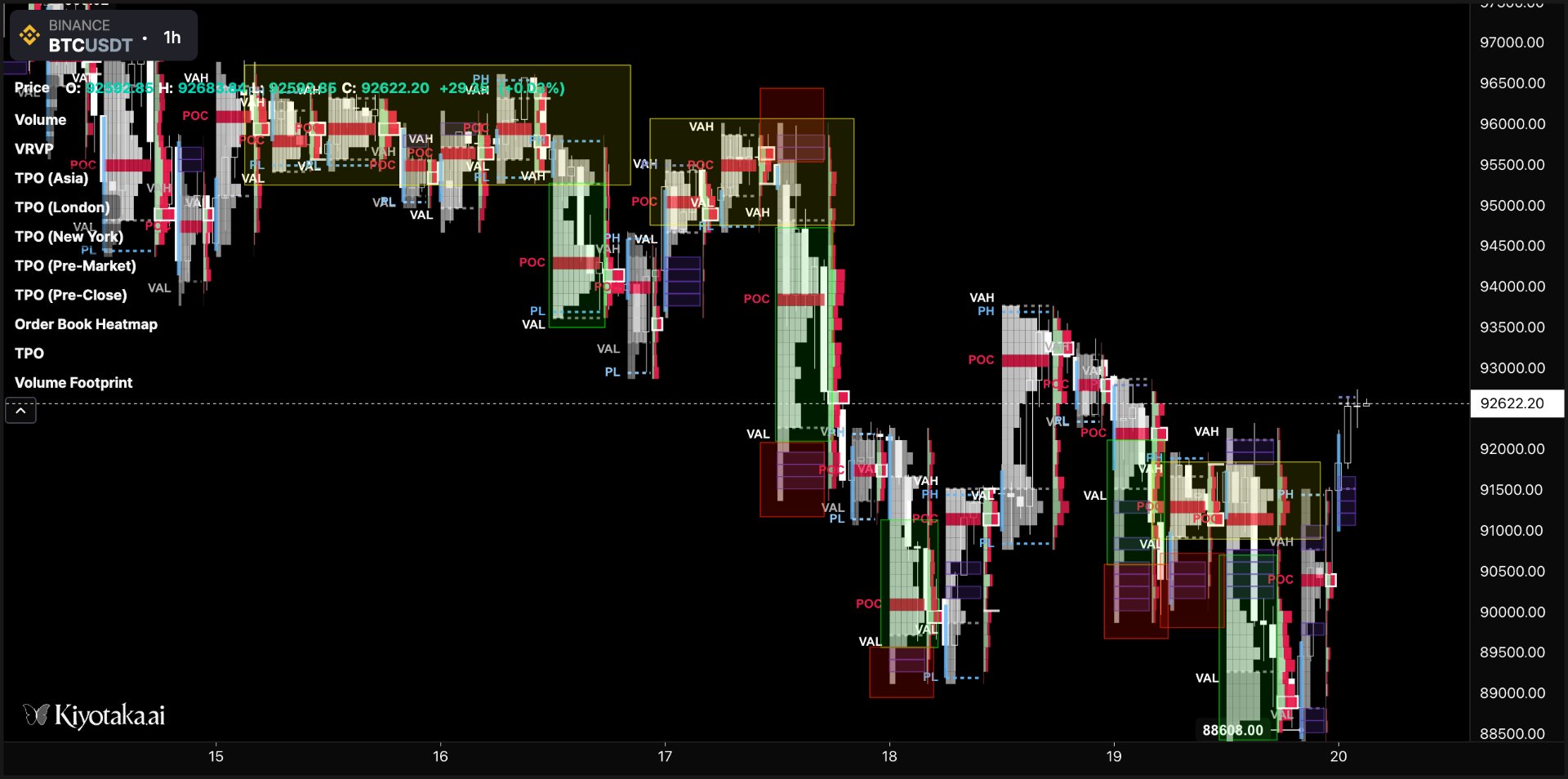
So now I have highlighted: Ranges (yellow), extensions (green), spikes (only early/late session, red).
I ignored ranges if formed only for one less significant session, like pre-close.
And finally, let's look at the big picture again with this knowledge.
Check for: POC migration on the daily, ranges, extensions, spikes (don't look for single prints, you need to interpret a bit for spikes).Mentally draw the little boxes.
What do you see Anon?
The answer is for you to find because:
a. I already wrote a lot of sh*t and my attention is out of the window
b. if I always make you dinner, you will starve when I'm gone.
Until next time.